Ideal for: Corporate Events | Institutional Events | Conference Cultural Evening | Social Celebrations | Tourist Groups
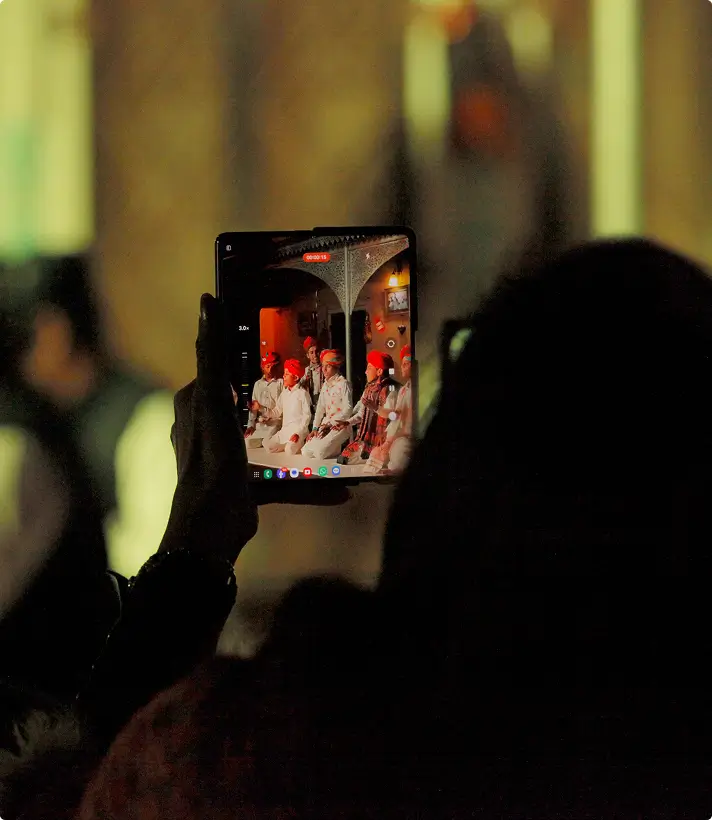
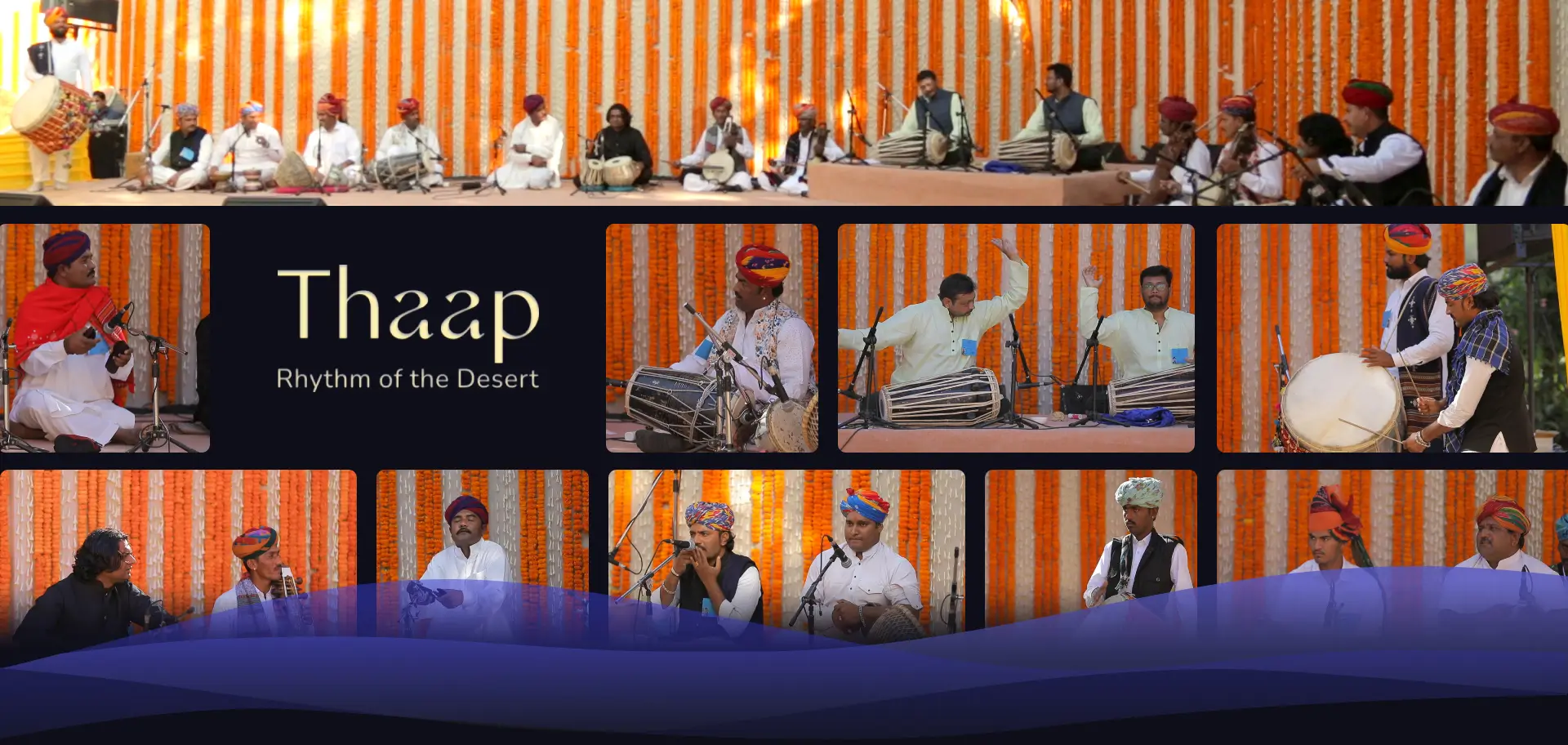
Thaap is first of its kind ensemble of musically diverse classical & folk percussion instruments of Rajasthan. This 30-minute power-packed concert of Dhol, Dholak, Khartal, Morchang, Bhapang and Nagara along with classical rhythm instruments - the Pakhawaj and the Tabla are accompanied by two string instruments of Rajasthan folk - the Kamayacha and the Sindhi Sarangi.
THAAP has been conceptualised & designed by Praveen Arya and Vinod Joshi and produced by Dancing Peacock. The 20 leading artistes represent 6 music communities of Rajasthan from 4 distinct cultural regions.
The first concert of THAAP was presented at the farewell lunch of G20 Sherpa Delegates at Ranakpur in Rajasthan in December 2022.

Khadtal is the main percussion instrument of the Manganiyar folk singers of western Rajasthan. This is a surprisingly unassuming instrument made of four small and thin rectangular plates of Rohida and Kair wood. They are played with both hands by placing between the palms while the player swings in dance-like movements.
Nagada is a loud rhythm instrument - a kettle drum - popular in various sizes: a large one played standing with big drum sticks to smaller ones played in pair in seated position. Given strong association with sovereignty of truth and righteousness, these were played as war drums and at auspicious occasions and festivals. This 20-year-old Nagada has been provided by Sh Nathu Solanki.
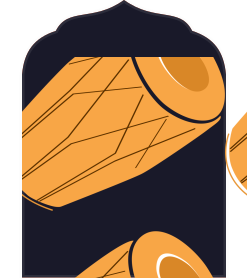
The Dholak is the most commonly played musical instrument in Northern India. This double-headed drum is played with both hands, usually in seated position. The Dholak is a popular accompaniment to song and other instruments in countless folk genres, devotional traditions, and family functions. It is usually made of wood with leather heads.
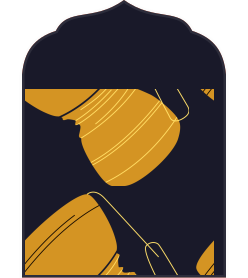
Bhapang is a single-stringed "talking drum" used by the folk musicians of particularly Mewat region in Rajasthan. It is a unique instrument with a gut string passing through a skin parchment and produces a very peculiar sound. Bhapang accompanies folk songs and bhajans (spiritual, devotional songs) and poetry recital of the region. This 15-year-old Bhapang has been provided by Sh Ram Nath Jogi.
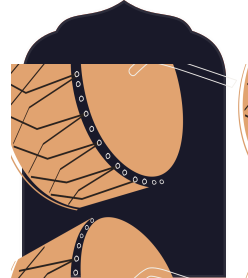
The Dhol is a popular double-sided barrel drum played mostly as an accompanying instrument in regional music forms in many parts of India including Rajasthan. This fairly large percussion instrument is made primarily of wood and leather. It is played with standing position with wooden sticks.
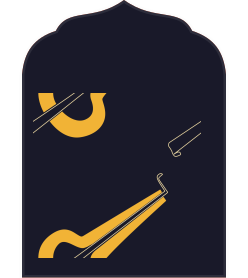
Morchang (also Morsing) is similar to Jew's harp, a small musical instrument made of iron. It is held between the thumb and the forefinger of the left hand. A portion of Lamella is pressed firmly between the teeth and the free tongue is struck in a to and fro movement by the right-hand forefinger. The mouth of the player acts as a resonator. Morchang is quite popular in western Rajasthan among the Langa-Manganiyar musicians. This Morchang has been provided by Sh Mohan Lohar.
Pakhawaj (or Pakhvaj) is a major percussion instrument of North Indian classical music. The instrument is barrel shaped with an asymmetrical convexity towards the left.
Pakhawaj was a major accompanying instrument of the Dhrupad style of singing before it made way for the more delicate Tabla. It is similar in shape to Mridanga of the Carnatic system, but slightly smaller.
The Tabla is a pair of two small drums of slightly different sizes and shapes, played together. Each drum is about 25 cm in height and is usually made of copper, clay or wood.
The Tabla are used in a variety of genres and styles of Hindustani music. Modern research suggests that the Tabla were invented (evolved) in the first half of the 18th century from Pakhawaj.
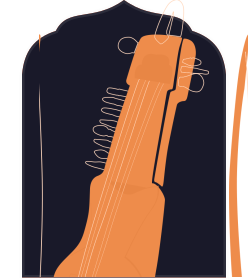
Sindhi Sarangi is a bowed string instrument of the Sindh region (at the cusp of western India and Pakistan). It is used by the Langa community of Jaisalmer and Barmer in Rajasthan as an accompaniment to their traditional songs.
The resonator, finger board and peg box are carved out of a single block of wood from Kair, Rohira, Toon or Sagwaan. It has four playing gut strings and twenty-two sympathetic steel strings. Bow stick has hair from the tail of the horse.
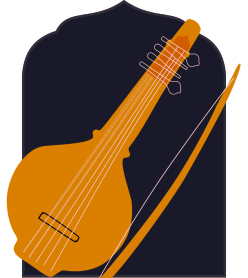
The Kamaycha is a string instrument native to western Rajasthan. It is used by the musicians of Manganiyar community. Its body is carved from a single piece of seasoned Mango or Rohida wood, and consists of 17 strings. Its round, big spherical belly is covered with goat skin and produces a warm tone. The concave bow stick is made from local Khejari wood and the hair from the tail of the horse. This 50-year-old Kamayacha has been provided by Sh Pappa Manganiyar.