A devotional folk music concert rooted in Kabir's teachings about formless devotion and equality.

Ideal for: Institutional Events | Social Celebrations | Tourist Groups
Kabir Vaani refers to the sung poetry of Saint Kabir, a 15th-century mystic poet and social reformer rooted in the Nirgun tradition of bhakti (devotion to the formless). Kabir Vaani is a powerful Indian poetry recital sung by folk singers from Madhya Pradesh. This devotional music ensemble channels the timeless wisdom of Saint Kabir, believed to be an incarnation of Lord Shiva. Free from idol worship, their performances connect audiences to the raw essence of Kabir's teachings: devotion beyond form.
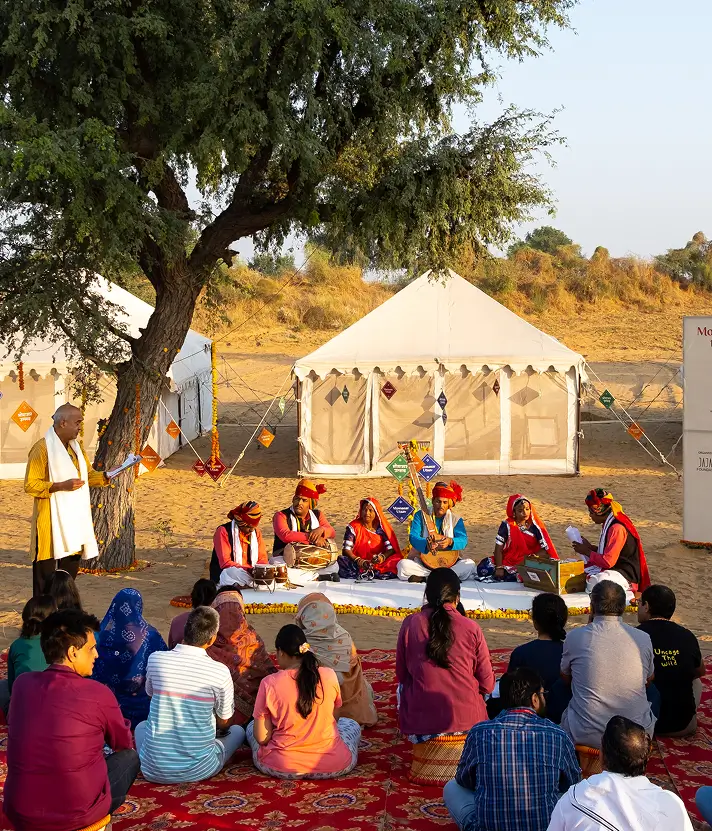
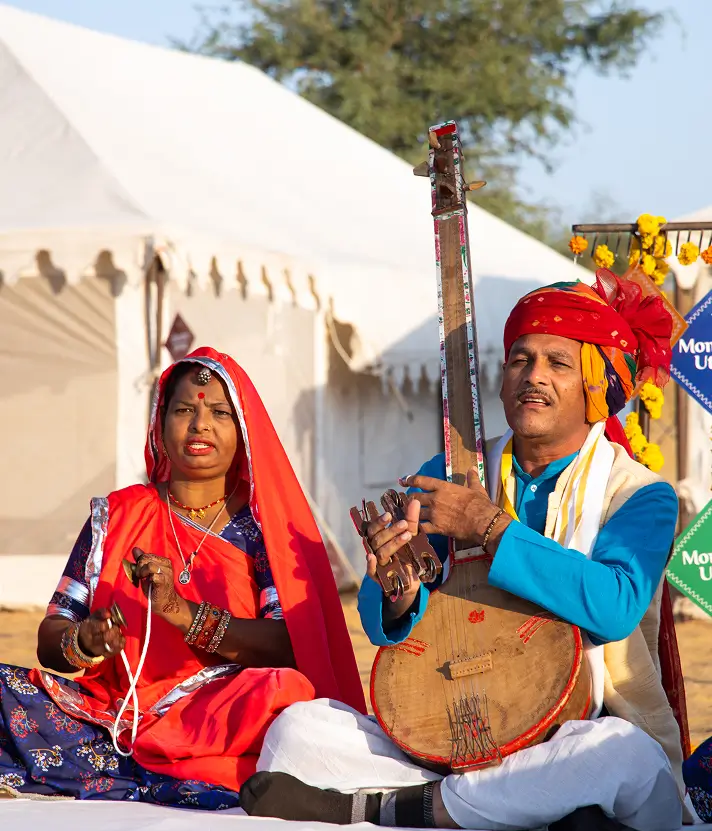
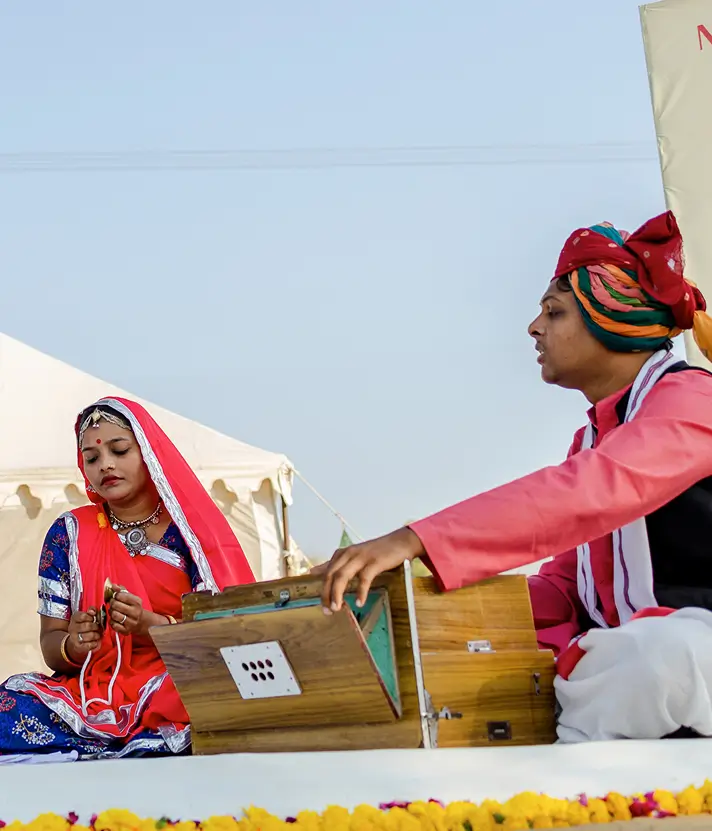
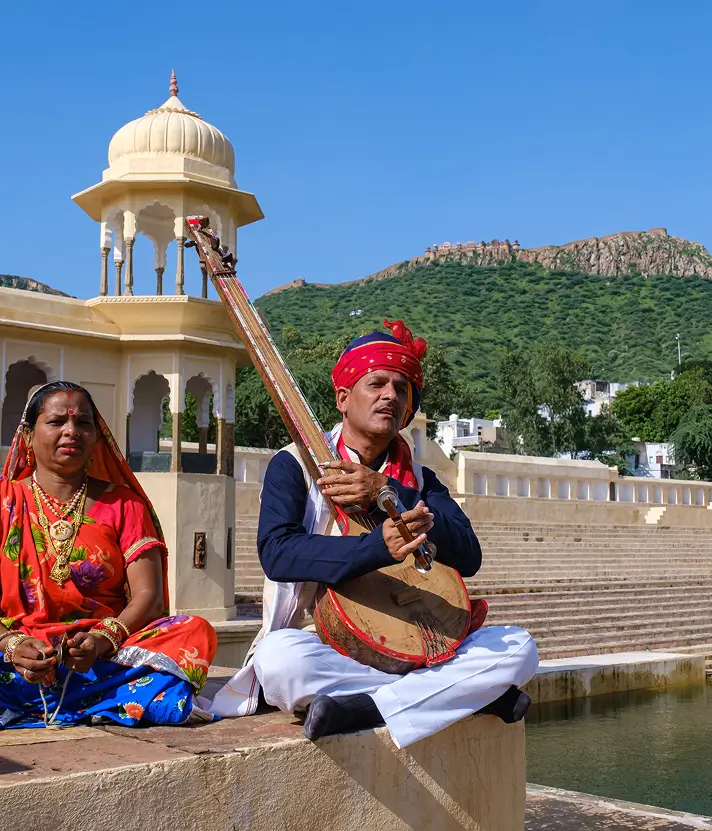
Kabir's teachings, often referred to as "Vaani", are performed as songs by folk musicians across northern and central India, especially in Madhya Pradesh, Rajasthan, and the border regions where cultural traditions overlap. In Rajasthan, they are sung in the local folk dialect and musical styles, set to the tunes of traditional instruments such as harmonium, dholak, and tambura; the ensemble breathes new life into centuries-old Kabir bhajans. His poetry speaks directly to human experience, love, and inner awakening, questioning blind faith and orthodoxy.
The interplay of voice and instrument reflects how Kabir once brought disparate communities together — a unifying spirit these musicians continue to carry. Each Kabir Vaani recital, performed by devoted followers of Gorakhnath—the powerful saint of the Nath Sampradaya—begins with a quiet invocation and gradually rises into a moving musical expression of divine longing. While Kabir denounced idol worship, his teachings have been embraced by communities historically excluded from mainstream religious practices.
These recitals are performed not just as concerts but as intimate spiritual gatherings that resonate with the message of equality, compassion, and formless divinity. Today, Kabir Vaani stands as a powerful tool for both cultural preservation and social connection, drawing new generations into the timeless relevance of Kabir's teachings.