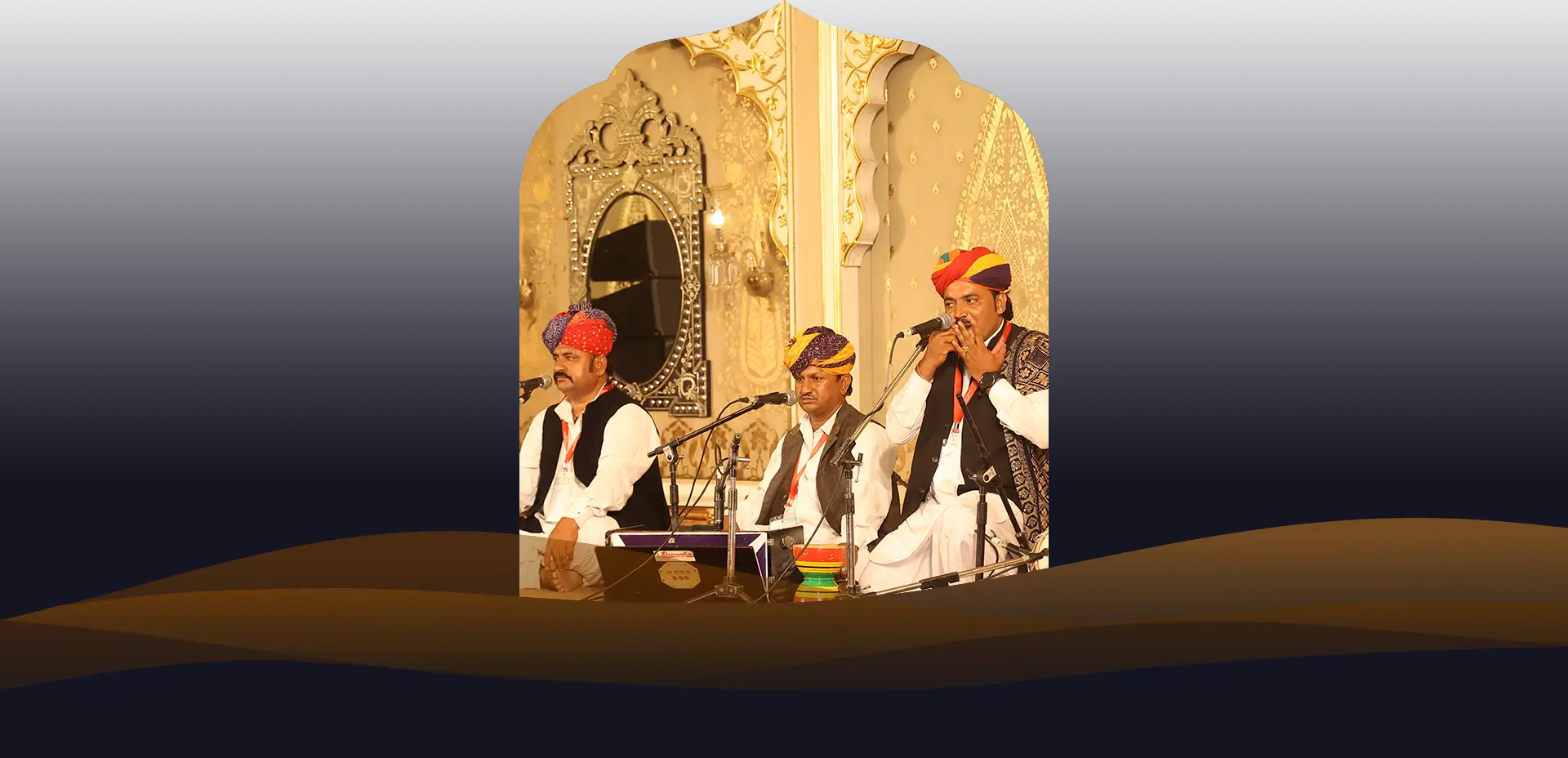
A versatile musical experience blending powerful vocals of Manganiyars with their traditional instruments; Kamaycha, Khartal, Morchang, Sarangi, and Dholak.
Ideal for: Weddings | Corporate Events | Institutional Events | Conference Cultural Evening | Social Celebrations | Tourist Groups
The Manganiyars are known for performances that touch the heart and awaken the senses. With powerful vocals, rhythmic beats, they blend storytelling, emotion, and energy. Whether it's a lively event or a quiet, reflective one, the Manganiyars adapt their music to suit the mood, and create a rich experience that stays with the audience for a long time. Their repertoire includes occasion-specific songs that cover a wide range of themes—devotion, nature, joy, grief, celebration, and daily life. This versatility makes their music emotionally resonant and widely appreciated.
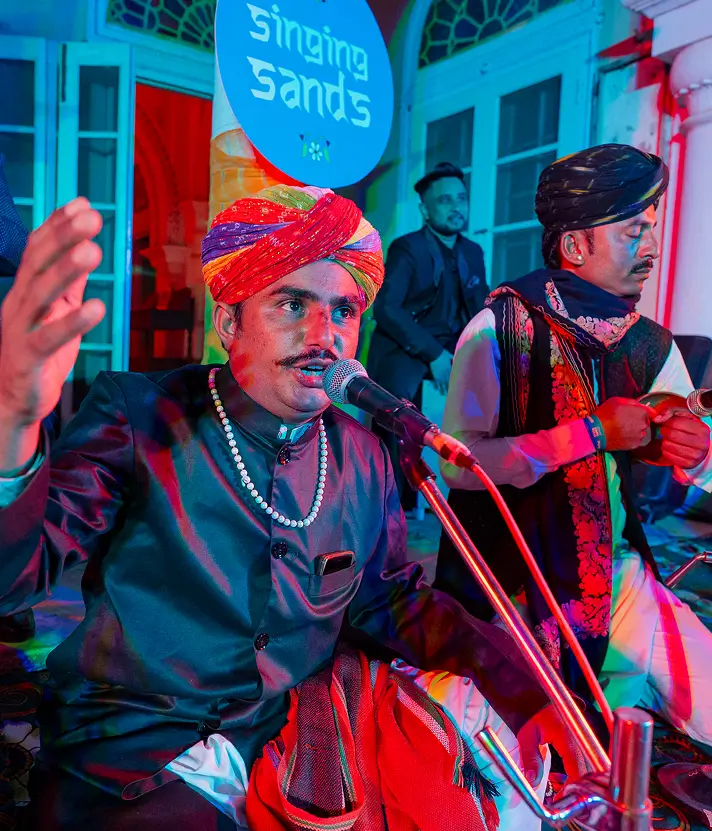
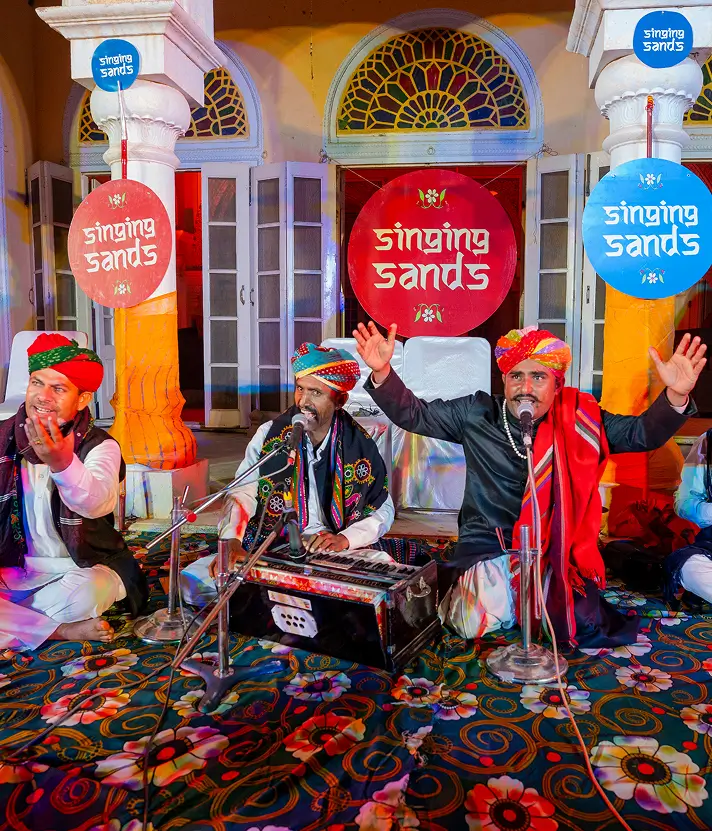
The Manganiyars are traditional hereditary folk musicians, settled in the villages and hamlets across Jaisalmer, Barmer, Jodhpur, and Balotra, particularly the Marwar region from centuries. Their oral musical tradition has been passed down through generations without written scripts.
Their music is rooted in rituals and everyday life, often performed during personal milestones and religious festivals like Teej and Gangaur. They sing about rain, animals, birds, historical legends, gods, kings, and even on the personal loss in family. This deep connection to both nature and culture has allowed their music to transcend local boundaries.
Over time, Manganiyar performances have expanded from village gatherings and royal courts to international stages. They have travelled widely in recent years, performing at global music festivals, private concerts, and cultural showcases. Their ability to connect with diverse audiences has made them true ambassadors of Rajasthani folk heritage.
Manganiyar musicians are known for their mastery in both vocal and instrumental music. Their artistry has been honed through generations, and they are admired for their emotive singing and deep understanding of traditional instruments.
Kamaycha: One of the oldest string instruments in the world, made from mango wood and covered with goat skin. It features 17 strings (3 gut and 14 steel), producing a deep, resonant sound that mirrors the soul of the desert. Considered the core of Manganiyar music, it's often played during ceremonial and festive events.
Khartal: A percussion instrument made of two pairs of thin wooden planks, typically from sheesham or rohida wood. Played with both hands, it produces a sharp, rhythmic clapping sound that adds energy and tempo to live performances.
Morchang: Also called the Rajasthani Jew's Harp, this wind percussion instrument is held between the teeth and plucked with a finger. Its droning, twangy sound adds a hypnotic layer, often used in storytelling and folk songs.
Sarangi: A bowed string instrument that closely mimics the human voice. It enriches vocal performances with emotional depth and texture.
Dholak: A two-headed hand drum that provides rhythm and drives the momentum of the performance.
These instruments create a multi-layered soundscape, each contributing distinct textures that make the Manganiyar musical tradition both ancient and alive. Their music often incorporates Sufi elements, ballads, devotional songs, and narratives about local deities and Rajput heroes.
Today, the Manganiyars perform their traditional music not only across India but around the world. At international festivals, embassy events, and private gatherings, they share Rajasthan's musical heritage with global audiences. Their performances are marked by authenticity, cultural richness, and emotional depth.
Dressed in traditional attire and playing age-old instruments, the Manganiyars deliver an experience that feels both timeless and personal. Their music bridges generations and geographies, earning them recognition as true custodians of India's folk legacy.
Bringing the Manganiyars to your event means offering your audience a piece of living history. Their performances are not just musical acts but cultural journeys, shaped by centuries of tradition and storytelling. Whether it's a wedding, a corporate evening, or a cultural celebration, they adapt beautifully to the setting while staying true to their roots.