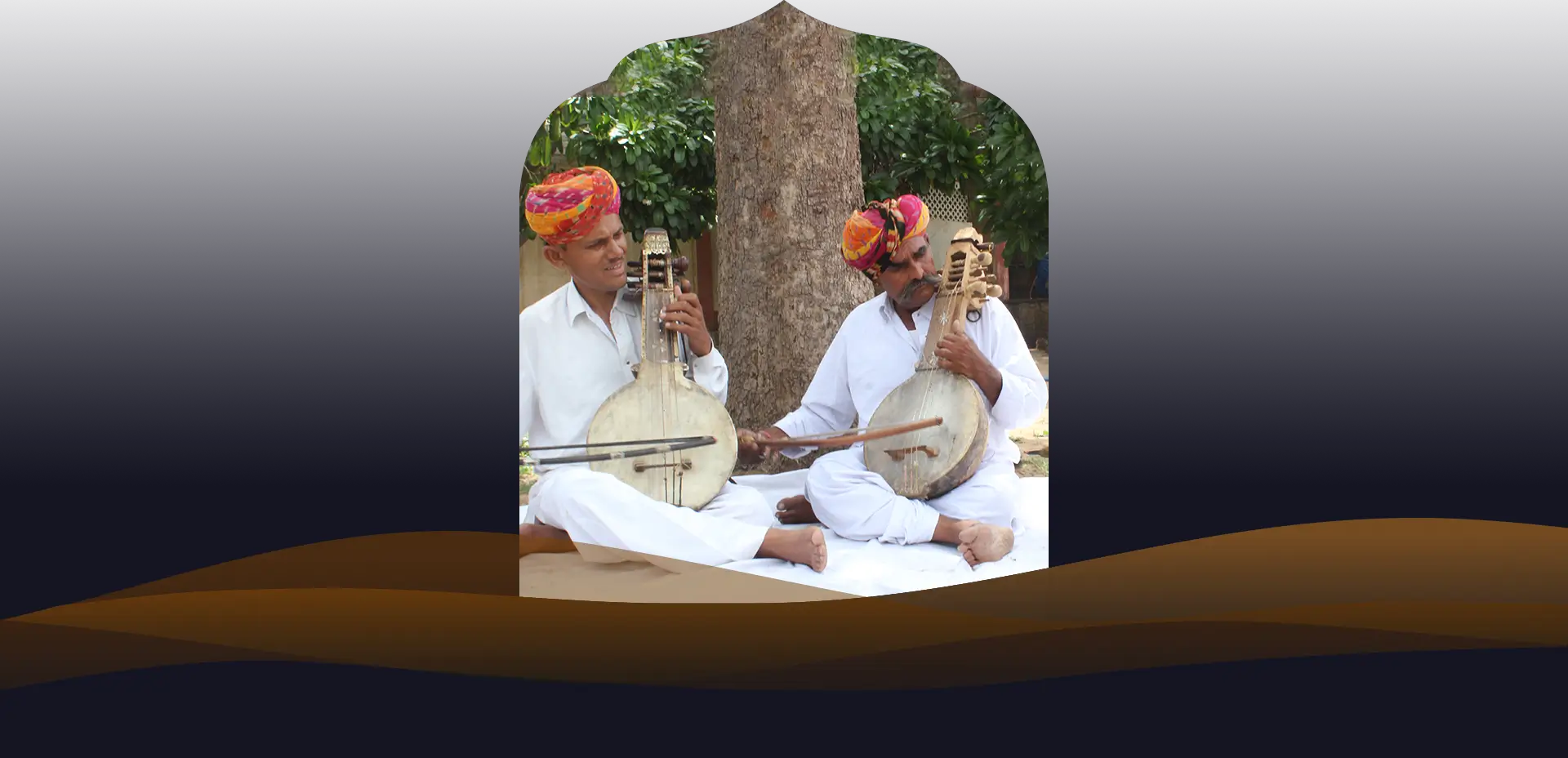
The Kamaycha Concert revives a fading tradition of Rajasthan's folk music, reviving the sound of a rare and ancient instrument in its purest, traditional form.The Kamaycha is intrinsically linked to the Manganiyar community that once resonated through both royal courts and village ceremonies.
Ideal for: Corporate Events | Institutional Events | Conference Cultural Evening | Social Celebrations | Tourist Groups
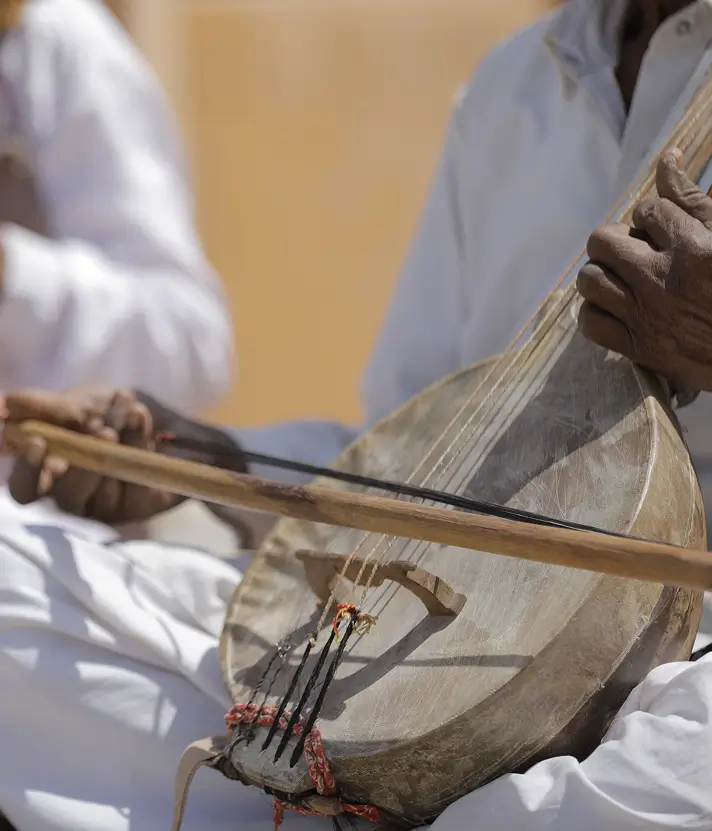
The Kamaycha is one of the oldest bowed string instruments of Rajasthan, known for its raw, resonant tone. Traditionally made from mango wood and covered with goat skin, it features 17 strings and is played alongside vocals, khartal , and dholak , often forming impromptu groups for life rituals, seasonal festivals, or royal gatherings.
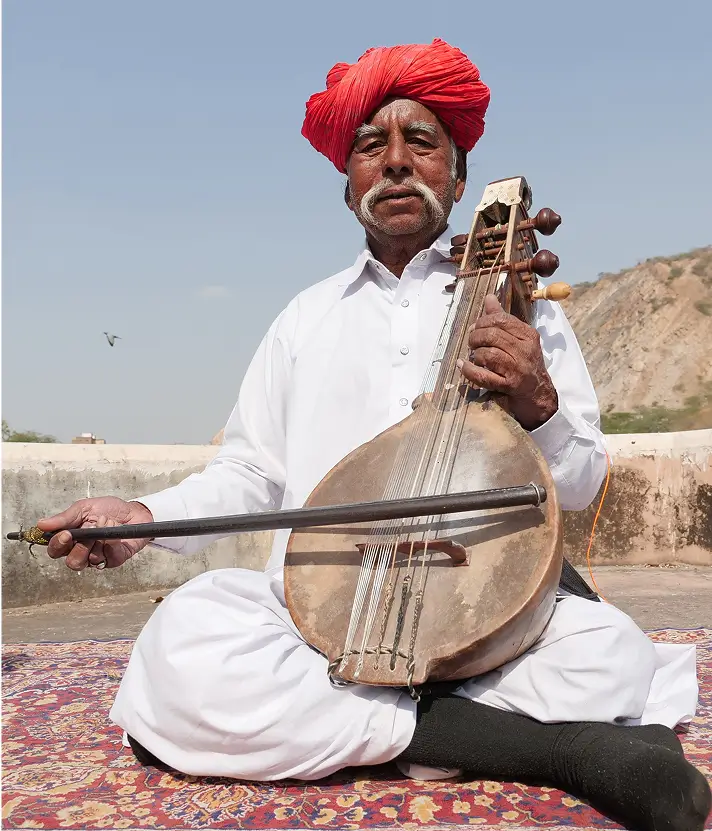
This concert brings together a rare group of 7-8 renowned Kamaycha players from villages and hamlets of Barmer, Balotra, Jaisalmer, and Jodhpur in western Rajasthan. In earlier times, lyrics and storytelling were central to performances, each musician joined in naturally—dholak , khartal , vocals—blending into a seamless, soulful experience. Today, beats often take center stage, but this performance brings back the lyrical richness and cultural depth.
The Kamaycha Concert is not just a musical event, it's a cultural preservation effort, spotlighting Indian music from the deserts of Rajasthan before it fades further from public memory.